


Rubber Curing Ovens: The Vulcanising Process
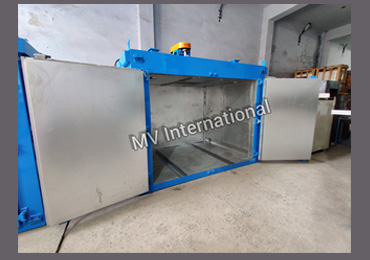
Rubber Curing Ovens: The Vulcanising Process
Raw rubber becomes a strong, elastic, durable material only after vulcanising, a controlled heat cure that cross-links the polymer. A rubber curing oven provides the even, accurate heat that vulcanising needs, turning soft compound into finished rubber goods.
What Vulcanising Does
Vulcanising uses heat to form cross-links between rubber molecules, which transforms a soft, tacky compound into a strong, elastic, heat-resistant material. The degree of cure sets the final properties, so temperature and time must be controlled precisely.
Even Heat, Accurate Control
Rubber parts vary in thickness, and every section must reach cure temperature for the right time. Forced-air circulation and accurate control ensure the whole part vulcanises evenly, avoiding under-cured cores or over-cured surfaces that would weaken the product.
- Even forced-air heat for uniform vulcanising
- Precise temperature and time control
- Programmable profiles for the compound
- Capacity for parts, mouldings or batches
Curing and Post Curing
Many rubber goods take an initial vulcanising cure followed by a post curing cycle to finalise strength and reduce residual volatiles. The controlled-heat discipline is shared with other elastomer and composite curing work.
Why It Matters
Under-cured rubber is weak and tacky; over-cured rubber turns brittle. Because the correct cure is invisible from outside, even, controlled, repeatable heat is what guarantees consistent, specification-grade rubber, which is why a dedicated oven is used.
In Short
A rubber curing oven vulcanises rubber with even, precisely controlled heat, developing the material's full strength and elasticity. Control defines the result, delivered on the same foundations as any heating oven.