


Industrial Drying Ovens: The Drying Process and Where They Fit
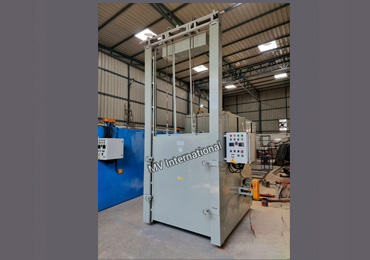
Industrial Drying Ovens: The Drying Process and Where They Fit
Nearly every manufacturing line has a point where moisture, solvent or residual liquid has to be removed before the product can move on, and that stage usually depends on a drying oven. A drying oven does more than apply heat; it manages a process of loosening moisture and carrying it out of the chamber.
Drying Is Two Jobs, Not One
Effective drying combines heat that releases moisture from the material with airflow and extraction that removes it from the chamber. Miss either half and drying stalls, plenty of heat but nowhere for the moisture to go, and humid air simply recirculates. A drying oven is designed to balance both.
The Role of Airflow and Extraction
Forced-air circulation carries heat to every part of the load and sweeps released moisture toward the exhaust. Controlled fresh-air intake and extraction then remove that moist air, keeping the chamber drying rather than just warming. This balance is what separates a real drying oven from a general heating chamber.
- Heat to release moisture from the material
- Circulation to reach the whole load evenly
- Fresh-air intake and exhaust to remove moist air
- Control to hold a gentle, material-safe temperature
Where Drying Ovens Fit
Drying appears everywhere: components before assembly, materials before coating, cores before casting. A gentle silica gel drying cycle and a heavy foundry core drying cycle sit at opposite ends of the same principle, low even heat for sensitive materials, high-capacity even heat for dense loads.
Why the Stage Matters
Residual moisture rarely shows up immediately. It surfaces later as coating failures, electrical faults or casting defects, problems that are hard to trace back. Reliable, even drying at the right stage prevents a whole category of downstream defects, which is why the drying oven earns more attention than its quiet role suggests.
In Short
An industrial drying oven pairs even heat with airflow and extraction to remove moisture reliably, batch after batch. Understanding drying as a process, not just heat, is the key to specifying one that actually works. For broader thermal processing, an industrial oven is built on the same foundations.