


How Polyurethane Curing Ovens Work and Where They Are Used
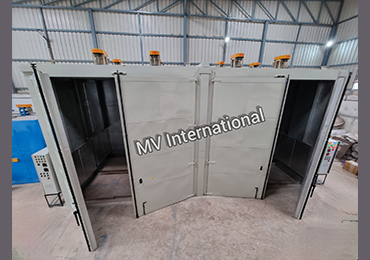
How Polyurethane Curing Ovens Work and Where They Are Used
Polyurethane develops its final strength and properties only after a controlled heat cure, and that cure is what a polyurethane curing oven is built to deliver. Get the temperature and time right and the part performs; get them wrong and the material stays soft or turns brittle.
What Curing Actually Does
Curing drives the chemical reaction that cross-links polyurethane into a stable, load-bearing material. That reaction is temperature and time dependent, so the oven's real job is to hold the whole part at the correct temperature for the full cure without over-baking the surface.
Even Heat, Held Precisely
A PU curing oven combines forced-air circulation with accurate control so every surface of the part sees the same cure. Thick and thin sections, edges and centres all need to reach cure temperature together, which is only possible when airflow is even and the controller holds the set point closely.
- Uniform forced-air heat across the whole part
- Accurate temperature control for a repeatable cure
- Programmable ramp and soak for the PU recipe
- Sizing to suit part geometry and batch volume
Typical Applications
PU curing ovens serve wheels, rollers, coatings, castings and moulded components. The same controlled-cure logic carries over to related work such as PU wheel processing and, more broadly, any composite curing cycle where cross-linking must be driven to completion.
Why Control Matters
An under-cured polyurethane part fails early; an over-cured one can lose toughness. Because the difference is invisible until the part is in service, tight, even, repeatable heat is the whole point of using a dedicated curing oven rather than a general chamber.
In Short
A polyurethane curing oven delivers even, precisely controlled heat so PU cross-links fully and consistently. It protects the properties you are paying for. For broader curing and drying needs, a batch oven runs the same kind of programmed cycle.