


Composite Curing Ovens: The Process and Applications
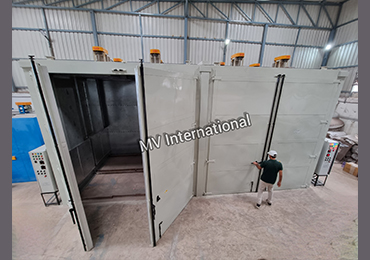
Composite Curing Ovens: The Process and Applications
Fibre-reinforced composites gain their strength only when the resin matrix cures correctly, and that depends on a carefully managed heat cycle. A composite curing oven provides the uniform, programmable heat that turns a laid-up part into a finished structural component.
The Cure Cycle
Composite cures follow a defined profile, a controlled ramp to temperature, a soak long enough to cross-link the resin fully, and a managed cool-down. Straying from that profile leaves the part under-cured or introduces internal stress, so the oven has to follow the recipe precisely.
Uniformity Is Critical
Because composite parts often combine thick and thin sections, even heat is essential. Forced-air circulation and careful loading ensure every region of the part reaches and holds cure temperature together, avoiding weak spots where the resin never fully cross-linked.
- Programmable ramp, soak and cool profiles
- Even forced-air heat for mixed-thickness parts
- Accurate control and monitoring across the cycle
- Chamber sizing matched to part and tooling
Where Composite Curing Is Used
These ovens serve aerospace-style laminates, automotive parts, tooling and industrial mouldings. The controlled-cure discipline is shared with polyurethane curing and with post curing, where an additional heat cycle drives properties to their final values.
Why a Dedicated Oven
General heating cannot guarantee the profile accuracy and uniformity composites demand. A dedicated curing oven with programmable control and even airflow is what makes the cure repeatable, part after part, which is exactly what structural components require.
In Short
A composite curing oven runs a precise, uniform heat cycle so the resin matrix cures to full strength without internal stress. Repeatability is the whole value. For discrete-load thermal processing more generally, a batch oven uses the same programmable approach.