


Motor Winding Baking Ovens: Process and Uses
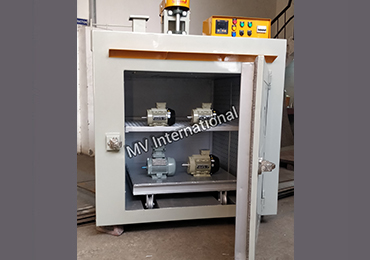
Motor Winding Baking Ovens: Process and Uses
After a motor is wound and impregnated with varnish, that varnish has to be baked to cure it, and a motor winding baking oven is what turns a soft, freshly dipped winding into a solid, moisture-resistant coil that lasts.
What the Bake Achieves
Impregnating varnish fills the gaps in a winding, but only baking cures it into a hard, bonded mass. The cured varnish locks the wires in place against vibration, seals out moisture, and improves heat transfer, all of which extend the coil's working life.
Even Heat for a Full Cure
The whole winding must reach cure temperature together, so forced-air circulation and accurate control are essential. Uneven heat leaves some varnish under-cured and tacky while other areas are done, which undermines the bond the process is meant to create.
- Controlled ramp and soak for the varnish system
- Even forced-air heat through the whole winding
- Extraction for solvent vapours released during bake
- Capacity for single coils or batches
Part of the Motor Workflow
Baking sits alongside other motor-shop steps. Windings are often dried first in an electric motor drying oven, and stators may be finished in a stator drying oven. The baking oven is the step that sets the varnish.
Why It Matters
A properly baked winding resists vibration, humidity and thermal cycling far better than an unbaked one. Skipping or rushing the bake is a common cause of early rewind failures, which is why the baking oven is a fixture in quality motor shops.
In Short
A motor winding baking oven cures impregnating varnish with even, controlled heat, bonding and sealing the coil for a long service life. It is where winding quality is locked in. The same curing discipline appears across the heating oven family.